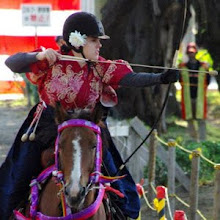
To all my dear friends from New York who told me that Hell would freeze over before the Red Sox won the World Series...Satan's shopping for ice skates.
THE RED SOX WON THE WORLD SERIES!!!!!!!!!!!!!!!!!!!!!!!!!!!!
Thursday, October 28, 2004


Saturday, October 23, 2004
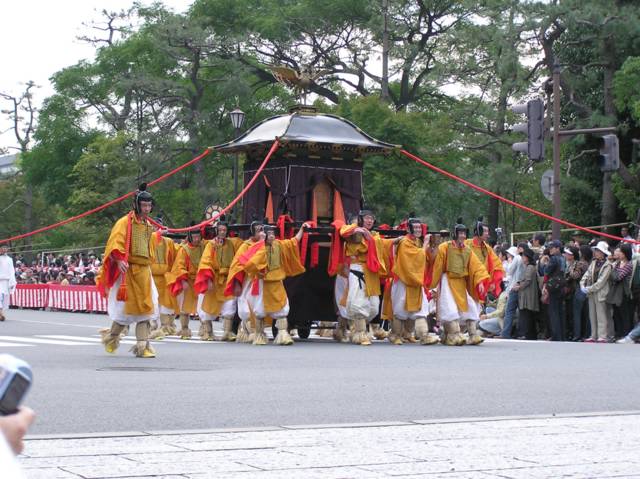
Shinko-Retsu

This is one of two palaquins that hold the spirits of the Emperors Komei and Kammu. Emperor Komei is the Deity of the Heian Shrine and Emperor Kammu was the Emperor who moved the capital from Nara to Kyoto. In Japan the Royal family is said to decend directly from the Sun Goddess Ameratsu and thus the Royal family is honored as deities in their own right.
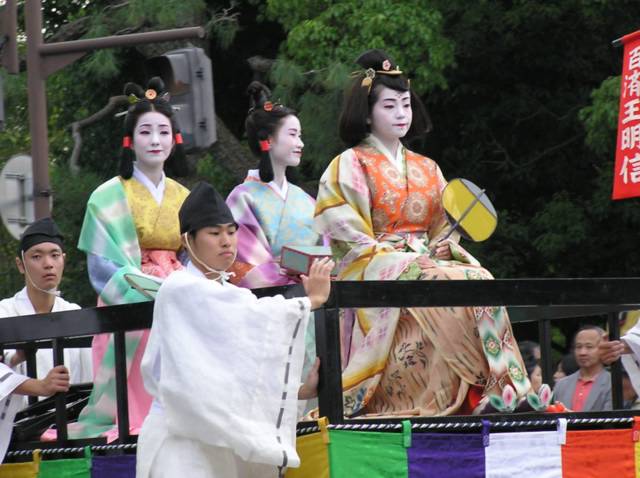
Kudara-O-Myoshin (780)
Kudara-O-Myoshin was the Chief Lady-in-Waiting to Emperor Kammu's Imperial Court. The highest position that a woman who was not part of the Imperial family could recieve. In the west a Lady-in-Waiting is usually a woman, attached to a court, in charge of managing the household or some other womanly duty. In Japan, however, a Lady-in-Waiting of the court had the trust and the ear of the Emperor and Empress and often acted as an advisor.
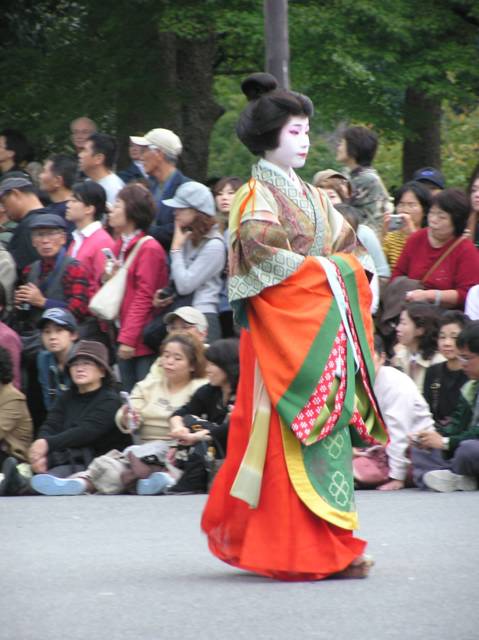

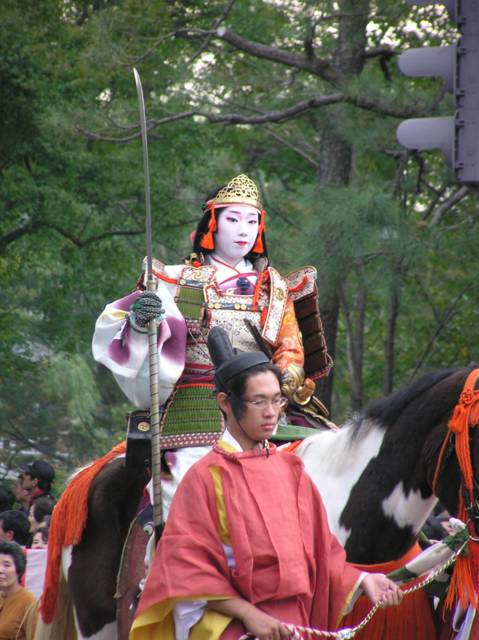
Tomoe-Gozen (1180)
The sight of Tomoe-Gozen was the pivot around which I wrote my thesis. There she was, a woman warrior in what I thought was a strict patriarchal society. Since then I have learned that Japan wasn't always a patriarchal society but the site of a woman warrior is not common by any means. She lived and fought in a liminal time at the end of the Heian Period and the beginning of the Warring States Period. During the Heian Period women of the Imperial court had both power and authoriy over the court and their own lives. In the Warring States period they lost all authority and most of their power. Tomoe-Gozen was the last of these women. She was able to hold power and authority as a woman acting like a man. After her disappearance women had little power and authority outside their roles as wifes or courtesans.


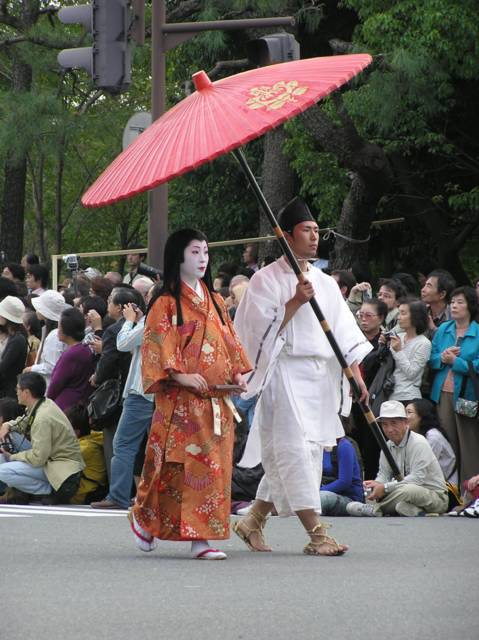

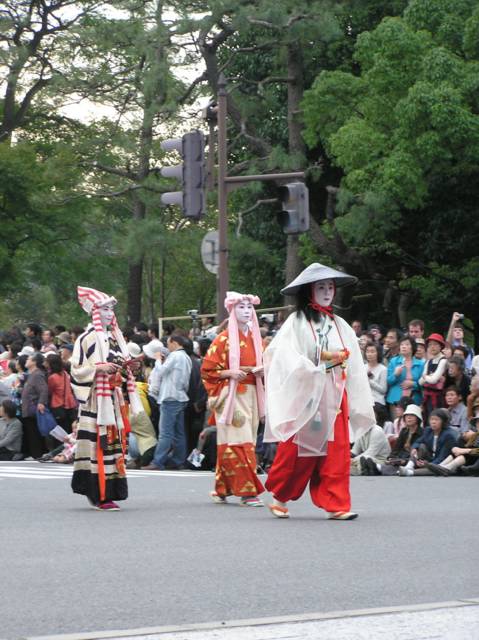
Izumo-no-Okuni (1600)
Izumo-no-Okuni was, according to legend, originally a maiden from the Izumo Shrine, but she came to Kyoto and worked in the Pleasure Quarter as a Dancer and a Courtesan. She quickly became famous by dressing and acting like a man in her dances. These dances became very popular and many other women, and young boys of the Pleasure Quarter began to mimic her. Such was the popularity of these dances that the Tokugawa Shogunate banned both women and young boys from performing them. The dances, however, didn't die, and began to be performed by grown men. This was the origin of Kabuki. Now, Kabuki is an cherished performing art in Japan were men play both male and female roles.


Princess Kazu (1860)
She was the sister of Emperor Komei and married into the Tokugawa Family. During the Tokugawa (Edo) Era the Emperor was the titular head of the Japanese government but had no power outside of his role of the head of the Shinto religion. The Shogun had power over the countries government. It was common for the Tokugawa family to marry royal daughters to legitimize their rule.
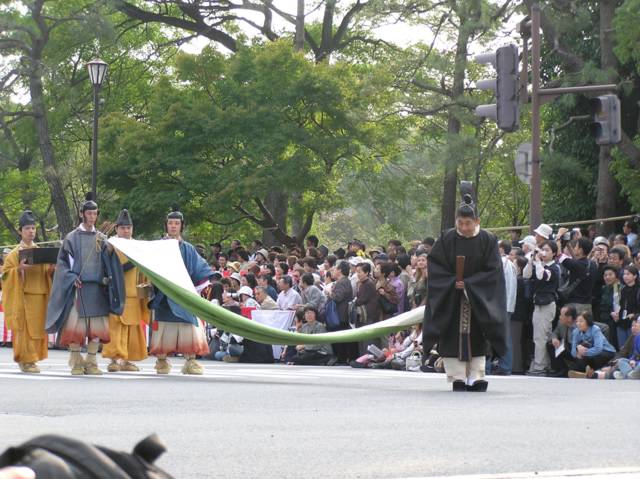
The Jidai Matsuri goes backward through time, starting with the Meiji Revolution (1868) and ending with the beginning of the Heian Period (794). Here we see a Court Noble from the Meiji Revolution. He is one of the Seven Court Nobles who tried to convince the Emperor to resist the opening of Japan to foreigners.
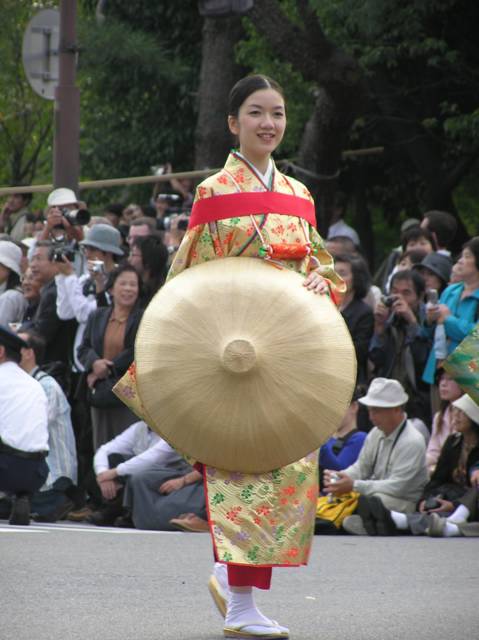
Last year I was in Japan for 3 months studing at Doshisha Women's College in Kyoto. That was the first time I got to see the Jidai Matsuri (Festival of Ages). The Festival of Ages was the inspiration for my Senior Thesis on the women of the Heian Era. This year I returned the Festival to watch it again, to see it through new eyes. I was very happy that I did. Japan's history continues to intrigue me, especially the history of the women living in Japan. Of course, new knowlegde tends to bring new questions. While my focus durning the festival was on the Heian women, this time I couldn't help noticing the women that marched in the other time periods, and were seen throughout the festival. How did their lives compare to the lives of women in the Heian Period? Why were they displayed here? More questions...well I have a year to find the answers before next year's Jidai Matsuri.
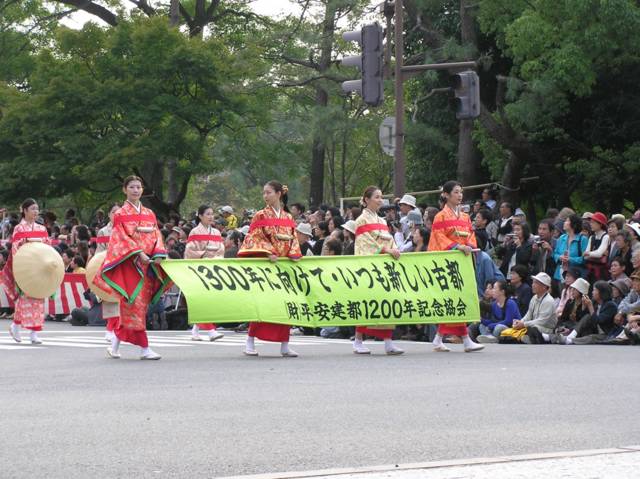
The beginning of the Jidai Matsuri! The Jidai Matsuri was officially started to celebrate the history of Kyoto. Kyoto was the capital of Japan from 794 to 1868 when Emperor Meiji moved the capital the Tokyo. The people deeply felt the loss of their status as the center of Japan. The Jidai Matsuri helps the people of Kyoto to remember the greatness of Kyoto both past and present.


Subscribe to:
Comments (Atom)