| Magnitude | Number of Earthquakes |
| 9.0 or above | 1 |
| 8.0-8.9 | 0 |
| 7.0-7.9 | 1 |
| 6.0-6.9 | 36 |
| 5.0-5.9 | 274 |
| 4.0-4.9 | 240 |
| 3.0-3.9 | 0 |
| 2.5-2.9 | 0 |
| 0.0-2.4 | Not reported |
| Total | 552 |
Friday, March 18, 2011
A Week of Earthquakes


Tuesday, March 15, 2011


Monday, March 14, 2011
Earthquake and Tsunami
To all my friends and family,
Thank you for all you concern. I am alright. I am safe and far enough from the ocean and rivers that there is no danger from tsunami. Please don’t worry too much.
As you know on Friday, March 11, an 8.9 magnitude quake hit of the coast of northern Japan, a bit south of where I live. I was at school (elementary), in the teachers’ room on the bottom floor when the quake struck. It started slow but built up quickly to some very violent shakes. The teachers I was talking with raced up stairs to be with their students. I stayed in the teachers’ room. We unplugged the heaters and held up the bookcases. One of the teachers turned on the TV and the vice principal gave instructions to the students and teachers over the intercom. The building kept shaking violently. A few minutes in the power went out. Children who had started to go home raced back to the school and a teacher went out to tell them to cover their heads and crouch down. The earth was still shaking hard. I could hear the sirens and alarms going off and the students and teachers yelling and crying. The quake lasted for about eight minutes, and yet the building stood. As the quake slowly died, the power didn’t come on. A teacher went out to his car to check the news. He came running in with the news that there was a tsunami warning. We were lucky to be high enough up not to evacuate. The teachers went through the school to give the news, and some teachers came down to listen and bring news to the other teachers.
After that there was a lot of confusion. The earth would continue to shake violently and calm for brief minutes. Some teachers took their cars through the streets looking for children that hadn’t made it home before the quake hit. They reported the lights were out everywhere. The janitor had a portable TV that he brought to the teachers’ room and I watched live as far too soon after the first violent quake a tsunami of unbelievable height and power hit the coasts of Miyagi and Fukushima Prefectures. There was no time for them to get away. The tsunami was predicted to hit Hachinohe in about an hour. Luckily for us there was enough time to evacuate the coast.
Concerned we all tried to reach family and friends. But we could only send mail messages, and not all of those got through. No calls went through at all. And still the quakes continued to come. Parents started to rush to the school to pick up their children; I’m sure some of them had to evacuate their homes. The time for the tsunami to hit passed. I saw a brief glimpse of it on TV, and when a teacher with a classroom on the 3rd floor came down, she said she had seen the wave hit, and that it had engulfed most of the port. The aftershocks continued. Night fell, and with no electricity or heat, it got very cold.
The remaining students came down to the first floor. Their parents struggled to find ways to get over the two large rivers that run through this town to get home from work to pick their children up. Some of the teachers drove the students’ home or to relatives’ houses. And the aftershocks continued. During every aftershock the students bolted under their desks to take shelter. Some of the shocks were big and some were small. But it seemed as if the earth was constantly moving.
Finally the last parent came to pick up her child. The teachers gathered in the teachers’ room. News that the gas stations were closed worried some of the teachers. One in particular wasn’t sure that he had enough gas to get home. Some of the other teachers had families that had evacuated their homes. It was completely dark. We only had candle light and some flashlights. The principal gave a talk about current knowledge regarding the earthquake and tsunami and sent the female teachers home.
One of the female teachers took me home. The lights were out everywhere. We had to go around the long way to go home. Luckily we found a bridge that was open. I couldn’t see the damage in the pitch black. Finally we got home. I walked into the apartment, and checked for damage. I was shocked that my two big bookshelves were still standing, even though many of the books fell out. Only one tea pot in my kitchen fell and broke. One picture frame broke in my living room. The damage was really small comparatively.
I went to my friends’ houses to check on them. They came over for the night. We had no electricity, but the gas and water. And we had enough food left over to eat for a few days. We tried to get news over our phones and the radio. It was very cold so we dressed in the warmest clothes and blankets we had. Aftershocks were still coming and some of them were pretty violent. Even after we fell asleep we woke up in the middle of the night to more earthquakes.
The next day the electricity was still out. We were still having aftershocks and it was very cold. Around noon we ventured out to visit my friends’ apartments and get them more clothes and blankets. We found a local grocery store and managed to get some fruits and vegetables and other food supplies. There were lines everywhere the stores were open. But the lines were all very orderly and there was no fighting. The lines for gas were the most amazing. Cars were lined up in all directions to get gas which was (and still is) rationed to 20 liters per person. The gas attendants hand cranked the gas. We returned home and spent the rest of the day trying to glean information from our phones and the radio and to contact friends and family in Japan and abroad.
The aftershocks continued constantly. It got to the point when the earth seemed that it was always moving. The second night I woke up twice to two big quakes. Finally about 4:15 in the morning the power came back on. We took showers in the morning and called our families abroad on the landlines. The shakes still continued but the tsunami warning and evacuation order had finally been released. (I had never been evacuated.) We turned on the TV to see the images in large form. It was devastating to see our own port destroyed. To see houses torn off their foundation and float along like boats. To see what had once been a lively town completely flattened. And most especially to see the nuclear reactors in such a dangerous state.
We drove up into the mountains to see how the barn and horses were. I was very glad to see that all the horses and people were well. Then we drove down to the port to see the damage. I don’t have words. It was like a war zone. It’s amazing to know with all the damage I saw, we were on the light end of the tsunami. And it is a testament to the Japanese building codes and preparedness that only 3 people died in the whole prefecture. The entire coastline has been devastated. It was only buildings and houses and ships, and can be rebuilt, but it was also people’s entire livelihoods that were destroyed.
Today we went back to work. Schools will be closed until Wednesday at least, and even after that it will be while until the students will go to school for the full day. Graduation was supposed to be this Friday; I don’t know what will happen. Another tsunami warning hit this morning, and we were evacuated. Luckily the tsunami didn’t come and the evacuation was released about an hour later. We are all still scared and in shock. Now we worry mainly about the nuclear reactors. Is it safe? No one seems to know.
But for now I am safe and healthy. It seems that the only things I can do now is watch and pray for those hardest hit in the three prefectures south of us. And I desperately hope that the nuclear plants can somehow be made safe in time.
Love, Alyssa

An approximate map of my location and the damage of the tsunami.

A road in the harbor.

The nearby ocean. The tsunami left debris on the top of the tree.
Thank you for all you concern. I am alright. I am safe and far enough from the ocean and rivers that there is no danger from tsunami. Please don’t worry too much.
As you know on Friday, March 11, an 8.9 magnitude quake hit of the coast of northern Japan, a bit south of where I live. I was at school (elementary), in the teachers’ room on the bottom floor when the quake struck. It started slow but built up quickly to some very violent shakes. The teachers I was talking with raced up stairs to be with their students. I stayed in the teachers’ room. We unplugged the heaters and held up the bookcases. One of the teachers turned on the TV and the vice principal gave instructions to the students and teachers over the intercom. The building kept shaking violently. A few minutes in the power went out. Children who had started to go home raced back to the school and a teacher went out to tell them to cover their heads and crouch down. The earth was still shaking hard. I could hear the sirens and alarms going off and the students and teachers yelling and crying. The quake lasted for about eight minutes, and yet the building stood. As the quake slowly died, the power didn’t come on. A teacher went out to his car to check the news. He came running in with the news that there was a tsunami warning. We were lucky to be high enough up not to evacuate. The teachers went through the school to give the news, and some teachers came down to listen and bring news to the other teachers.
After that there was a lot of confusion. The earth would continue to shake violently and calm for brief minutes. Some teachers took their cars through the streets looking for children that hadn’t made it home before the quake hit. They reported the lights were out everywhere. The janitor had a portable TV that he brought to the teachers’ room and I watched live as far too soon after the first violent quake a tsunami of unbelievable height and power hit the coasts of Miyagi and Fukushima Prefectures. There was no time for them to get away. The tsunami was predicted to hit Hachinohe in about an hour. Luckily for us there was enough time to evacuate the coast.
Concerned we all tried to reach family and friends. But we could only send mail messages, and not all of those got through. No calls went through at all. And still the quakes continued to come. Parents started to rush to the school to pick up their children; I’m sure some of them had to evacuate their homes. The time for the tsunami to hit passed. I saw a brief glimpse of it on TV, and when a teacher with a classroom on the 3rd floor came down, she said she had seen the wave hit, and that it had engulfed most of the port. The aftershocks continued. Night fell, and with no electricity or heat, it got very cold.
The remaining students came down to the first floor. Their parents struggled to find ways to get over the two large rivers that run through this town to get home from work to pick their children up. Some of the teachers drove the students’ home or to relatives’ houses. And the aftershocks continued. During every aftershock the students bolted under their desks to take shelter. Some of the shocks were big and some were small. But it seemed as if the earth was constantly moving.
Finally the last parent came to pick up her child. The teachers gathered in the teachers’ room. News that the gas stations were closed worried some of the teachers. One in particular wasn’t sure that he had enough gas to get home. Some of the other teachers had families that had evacuated their homes. It was completely dark. We only had candle light and some flashlights. The principal gave a talk about current knowledge regarding the earthquake and tsunami and sent the female teachers home.
One of the female teachers took me home. The lights were out everywhere. We had to go around the long way to go home. Luckily we found a bridge that was open. I couldn’t see the damage in the pitch black. Finally we got home. I walked into the apartment, and checked for damage. I was shocked that my two big bookshelves were still standing, even though many of the books fell out. Only one tea pot in my kitchen fell and broke. One picture frame broke in my living room. The damage was really small comparatively.
I went to my friends’ houses to check on them. They came over for the night. We had no electricity, but the gas and water. And we had enough food left over to eat for a few days. We tried to get news over our phones and the radio. It was very cold so we dressed in the warmest clothes and blankets we had. Aftershocks were still coming and some of them were pretty violent. Even after we fell asleep we woke up in the middle of the night to more earthquakes.
The next day the electricity was still out. We were still having aftershocks and it was very cold. Around noon we ventured out to visit my friends’ apartments and get them more clothes and blankets. We found a local grocery store and managed to get some fruits and vegetables and other food supplies. There were lines everywhere the stores were open. But the lines were all very orderly and there was no fighting. The lines for gas were the most amazing. Cars were lined up in all directions to get gas which was (and still is) rationed to 20 liters per person. The gas attendants hand cranked the gas. We returned home and spent the rest of the day trying to glean information from our phones and the radio and to contact friends and family in Japan and abroad.
The aftershocks continued constantly. It got to the point when the earth seemed that it was always moving. The second night I woke up twice to two big quakes. Finally about 4:15 in the morning the power came back on. We took showers in the morning and called our families abroad on the landlines. The shakes still continued but the tsunami warning and evacuation order had finally been released. (I had never been evacuated.) We turned on the TV to see the images in large form. It was devastating to see our own port destroyed. To see houses torn off their foundation and float along like boats. To see what had once been a lively town completely flattened. And most especially to see the nuclear reactors in such a dangerous state.
We drove up into the mountains to see how the barn and horses were. I was very glad to see that all the horses and people were well. Then we drove down to the port to see the damage. I don’t have words. It was like a war zone. It’s amazing to know with all the damage I saw, we were on the light end of the tsunami. And it is a testament to the Japanese building codes and preparedness that only 3 people died in the whole prefecture. The entire coastline has been devastated. It was only buildings and houses and ships, and can be rebuilt, but it was also people’s entire livelihoods that were destroyed.
Today we went back to work. Schools will be closed until Wednesday at least, and even after that it will be while until the students will go to school for the full day. Graduation was supposed to be this Friday; I don’t know what will happen. Another tsunami warning hit this morning, and we were evacuated. Luckily the tsunami didn’t come and the evacuation was released about an hour later. We are all still scared and in shock. Now we worry mainly about the nuclear reactors. Is it safe? No one seems to know.
But for now I am safe and healthy. It seems that the only things I can do now is watch and pray for those hardest hit in the three prefectures south of us. And I desperately hope that the nuclear plants can somehow be made safe in time.
Love, Alyssa

An approximate map of my location and the damage of the tsunami.

A road in the harbor.

The nearby ocean. The tsunami left debris on the top of the tree.
Friday, April 09, 2010
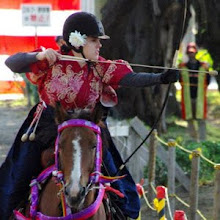
Well, it's finally warming up here (and by warming I mean a high of 50...), so that means more riding, YEAH! Yabusame is this month, plus there are shows coming up in May, June, and November. Time to get back in shape and get the horses back in shape too. I've been working on the website, trying to get it all updated, before I have more stuff to put up. It's frustrating but fun too.
Recently I've decided to try Yoga out. It keeps being recommended to me so I thought I'd try it. I'm still not sure what I think so I will write more after I go a few more times.
The new semester started yesterday. There are a lot of changes going on now with the teachers so I'm a bit nervous with how things will turn out, since I had such good relationships with the old teachers. I hope everything works out!
Recently I've decided to try Yoga out. It keeps being recommended to me so I thought I'd try it. I'm still not sure what I think so I will write more after I go a few more times.
The new semester started yesterday. There are a lot of changes going on now with the teachers so I'm a bit nervous with how things will turn out, since I had such good relationships with the old teachers. I hope everything works out!
Friday, March 12, 2010

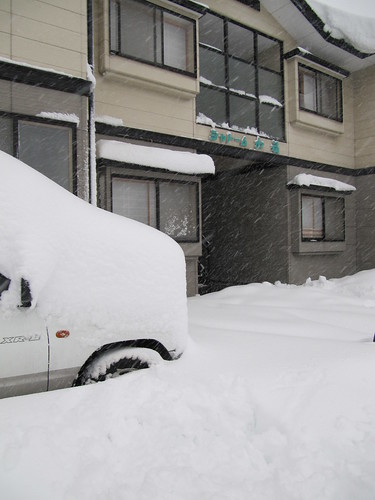
This was the amazing amount of snow we had yesterday. I had to shovel it out but there wasn't really anywhere to put the snow after... I estimate that we got 70 + centimeters of snow yesterday. Commuting was horrible today, Hachinohe is terrible at cleaning up the snow. The buses weren't running when I had to go to a school today, so we had to take a taxi, which took forever. Luckily by the end of the day a lot of the snow had melted and the roads were a bit better. I hope the temperatures stay up tomorrow so that it keeps melting.
Thursday, March 11, 2010
It's snowing today, *sarcasm* yeah *end sarcasm*
No really there is over half a meter out there and it's still coming down. Up side is that they are actually plowing the roads, down side is it's freaking March. I want spring!!
Had graduation at the Jr. High Schools today. It went well, but the kids were crying buckets. They're really going to miss each other. I'll miss them too. I wish them all the best next year!
Found the dates for Sakura Yabusame in April! I'm looking forward to it, but I hope the weather cooperates so that I can get in riding shape before then, why do they not have indoor riding arenas!!
No really there is over half a meter out there and it's still coming down. Up side is that they are actually plowing the roads, down side is it's freaking March. I want spring!!
Had graduation at the Jr. High Schools today. It went well, but the kids were crying buckets. They're really going to miss each other. I'll miss them too. I wish them all the best next year!
Found the dates for Sakura Yabusame in April! I'm looking forward to it, but I hope the weather cooperates so that I can get in riding shape before then, why do they not have indoor riding arenas!!
Saturday, June 06, 2009
Rainy Season....Sigh....
It's that time here in Japan, the time of never-ending rain, of mildew and mold, of the constant racket of pouring rain. It's the Monsoon Season! Holy freaking downpours! You don't get how depressing it is until you live through weeks of clouds and rain, and since I'm in the north, it's cold rain too! Meh... I want to go somewhere sunny for the next week or two... :(
Wednesday, February 11, 2009
Sick...
I love my job, I love my kids but if I get sick one more time this year I'm going to lose what's left of my mind. That is all.
Tuesday, February 03, 2009
At The Shrine ~ 初詣 p.2
We were at Kushihiki Hachiman Shrine in Hachinohe. It is both the most famous and the oldest shrine in Hachinohe. The Meiji Emperor is supposed to have stayed there when traveling in Aomori. More about the shrine later.
Anyway when we finished caring for the horses it was time to go in the shrine for the ceremony. Most people, when going on hatsumode or most other times, pray at the alter outside. They throw a few coins in the offering box and then ring the large bells hanging from the rafters. They bow, clap twice, pray, clap again, and finally bow again. There are different degrees in formality in how many times you bow and clap. I haven’t figured it out completely yet. However, we weren’t bound for the plebian outside but rather for the inner part of the temple. We were dressed in our formal jackets and breeches, though we obviously had to take off our riding boots to enter the shrine. The owner of the riding club and five of the riders (including me) entering the waiting room to the side of the shrine. It was a tatami room, heated by and electric brazier in the center. The owner of the riding club (who we all call sensei) went to one of the attendants to giving the offering of money and sake while the rest of us waited. Honestly, it wasn’t a very interesting room, traditional, with little ornamentation, a few picture on the walls. We waited in the crowded room for the priest to be ready. Eventually he came in to the room. He was wearing a long overcoat of blue brocade, with hakama pants and the hard brown hat that has a bump in the back. He was carrying a long wooden fan, and invited us into the back of the shrine. We walked into the main space of the shrine, which was behind the offering box and bells. There were rows of low seats, where you could sit with your legs tucked under you.
The room was very interesting, it was actually a combination of four different rooms with large sliding doors to separate the rooms, but the only doors closed were the ones behind us leading out to the front of the shrine and the offering box and bells. We could hear the rattle of coins and the ringing of the bells as people came to the shrine to pray. Directly in front of us was an empty table and beyond that another room. The room was dominated by the offering tables with mochi (rice beat into a past used for celebration) and sake. Beyond that was another set of sliding doors that led outside to the heart of the shrine. Faintly I could see the symbol of the deity, a large silverish mirror set into rock. To our right was a small room that contained a huge drum, and to our left was a small room that we had come through to enter the inner shrine, with a table.
We sat at the low chairs with our lower legs tucked under us. It was cold in the inner shrine, the back door to the shrine being left open so that we could see the mirror that represented the deity. (This part is a little fuzzy because it’s taken me so long to write this post.) The ceremony started as an assistant priest (second in charge?) banged the big drum to our right and the head priest asked us to bow and he began to pray. I don’t know exactly what he said, even a lot of Japanese have told me that they can’t completely understand what the priest says. He almost sings the chants in an odd kind of tonal singing that sounds similar to the singing of the narrators in Bunraku and other traditional Japanese theater. I was told that he was praying for the good health, fortune etc. of those people gathered there. Anyway, we spend the better part of a half and hour bent in half bowing. Finally when the priest was done praying and blessing the offerings we could sit up. The next part of the ceremony was when representatives from each group would get up to make an offering (?) or prayer (?) for the group. The priest in charge instructed them what to do. The assistant priest gave them an evergreen branch tied with the ceremonial rice paper (shaped like a bolt of lightning in Western terms) and the representatives took it placed in on the offering table and bowed twice, clapped twice, prayed, then bowed twice again. (There might have been a second round of clapping in there I can’t exactly remember.) Then the sat down again. After everyone had finished the ritual, the priest ended the ceremony and we all went to take a sip of the blessed sake (that stuff was amazingly strong!!!) and left the shrine.
After we get outside we returned to the horses and we waited for the priest who came outside to bless the horses. We got them all lined up and bowed again. The priest waved his ___ (it’s a long thin wand with many strands of the ceremonial rice paper tied to the end) over the horses and prayed for the good health of the horses in the coming year. Then we took pictures (which I will post as soon as I have a copy) and finally it was time for lunch. (Yum!)
Coming back was like going, same route etc. I rode Michael so I wasn’t worried about the Yakiimo man but Western (who was ahead of us) freaked out again. So it was through the crowds, over the bridge, down the stairs, across the rice paddies, and back up the mountain for us. It was a long day but it was tons of fun!! This trip was a trip of many firsts and it was the best experience I’ve had in Japan so far this time! I hope that I can do it again next year!!
Anyway when we finished caring for the horses it was time to go in the shrine for the ceremony. Most people, when going on hatsumode or most other times, pray at the alter outside. They throw a few coins in the offering box and then ring the large bells hanging from the rafters. They bow, clap twice, pray, clap again, and finally bow again. There are different degrees in formality in how many times you bow and clap. I haven’t figured it out completely yet. However, we weren’t bound for the plebian outside but rather for the inner part of the temple. We were dressed in our formal jackets and breeches, though we obviously had to take off our riding boots to enter the shrine. The owner of the riding club and five of the riders (including me) entering the waiting room to the side of the shrine. It was a tatami room, heated by and electric brazier in the center. The owner of the riding club (who we all call sensei) went to one of the attendants to giving the offering of money and sake while the rest of us waited. Honestly, it wasn’t a very interesting room, traditional, with little ornamentation, a few picture on the walls. We waited in the crowded room for the priest to be ready. Eventually he came in to the room. He was wearing a long overcoat of blue brocade, with hakama pants and the hard brown hat that has a bump in the back. He was carrying a long wooden fan, and invited us into the back of the shrine. We walked into the main space of the shrine, which was behind the offering box and bells. There were rows of low seats, where you could sit with your legs tucked under you.
The room was very interesting, it was actually a combination of four different rooms with large sliding doors to separate the rooms, but the only doors closed were the ones behind us leading out to the front of the shrine and the offering box and bells. We could hear the rattle of coins and the ringing of the bells as people came to the shrine to pray. Directly in front of us was an empty table and beyond that another room. The room was dominated by the offering tables with mochi (rice beat into a past used for celebration) and sake. Beyond that was another set of sliding doors that led outside to the heart of the shrine. Faintly I could see the symbol of the deity, a large silverish mirror set into rock. To our right was a small room that contained a huge drum, and to our left was a small room that we had come through to enter the inner shrine, with a table.
We sat at the low chairs with our lower legs tucked under us. It was cold in the inner shrine, the back door to the shrine being left open so that we could see the mirror that represented the deity. (This part is a little fuzzy because it’s taken me so long to write this post.) The ceremony started as an assistant priest (second in charge?) banged the big drum to our right and the head priest asked us to bow and he began to pray. I don’t know exactly what he said, even a lot of Japanese have told me that they can’t completely understand what the priest says. He almost sings the chants in an odd kind of tonal singing that sounds similar to the singing of the narrators in Bunraku and other traditional Japanese theater. I was told that he was praying for the good health, fortune etc. of those people gathered there. Anyway, we spend the better part of a half and hour bent in half bowing. Finally when the priest was done praying and blessing the offerings we could sit up. The next part of the ceremony was when representatives from each group would get up to make an offering (?) or prayer (?) for the group. The priest in charge instructed them what to do. The assistant priest gave them an evergreen branch tied with the ceremonial rice paper (shaped like a bolt of lightning in Western terms) and the representatives took it placed in on the offering table and bowed twice, clapped twice, prayed, then bowed twice again. (There might have been a second round of clapping in there I can’t exactly remember.) Then the sat down again. After everyone had finished the ritual, the priest ended the ceremony and we all went to take a sip of the blessed sake (that stuff was amazingly strong!!!) and left the shrine.
After we get outside we returned to the horses and we waited for the priest who came outside to bless the horses. We got them all lined up and bowed again. The priest waved his ___ (it’s a long thin wand with many strands of the ceremonial rice paper tied to the end) over the horses and prayed for the good health of the horses in the coming year. Then we took pictures (which I will post as soon as I have a copy) and finally it was time for lunch. (Yum!)
Coming back was like going, same route etc. I rode Michael so I wasn’t worried about the Yakiimo man but Western (who was ahead of us) freaked out again. So it was through the crowds, over the bridge, down the stairs, across the rice paddies, and back up the mountain for us. It was a long day but it was tons of fun!! This trip was a trip of many firsts and it was the best experience I’ve had in Japan so far this time! I hope that I can do it again next year!!
Tuesday, January 06, 2009

初詣 ~ January 2, 2009 Part 1
On January 2nd I went on hatsumode. Hatsumode is the first shrine visit of the year in Japan. On the 1st through 3rd of January Japanese people go on hatsumode to their local shrine to pray for the new year. I, of course, was also going to go on hatsumode, but not the normal way, I was going to go by horse!
Since coming to Japan this time I joined the local riding club called Polo. The people there are great! I don’t have a car so they pick me up at the train station, and drop me back off again when I am done. The are always willing to talk to me, and often let me hang out all day. It’s a fun club, were people learn to ride and enjoy going on trail rides together. The horses at the club aren’t my beloved, elegant Arabians, the are the traditional horses of Japan, a breed called Dosanko, and are not the most beautiful of horses. They’re short, I would estimate them to average about 13-14 hands. The smallest is closer to twelve and the largest is probably about 14+ hands. They have big heads and big round bodies, with a short thick neck connecting the two. Never destined for the dressage ring, they make perfect trail horses, surefooted and hardy, and for the most part calm. Originally breed to be warhorses, they now are a dying breed, (as are all Japanese horse breeds) unable to compete with Thoroughbreds, Warmbloods, and Arabians in racing, dressage, and jumping which are the popular horse sports in Japan today. These horses are still used in one of their traditional sports. The reason that the club is called Polo is because they still play traditional Japanese style polo at the local shrine each year. I didn’t get to see it last year so I’m definitely going this year!
So, back to hatsumode. I woke up pretty early that morning to meet one of the nice ladies from the riding club that lives near me so we could carpool to the barn. It was cold but clear, which was great because the weather earlier that week was calling for snow and rain. We got lucky. We got to the barn, tacked up, got dressed, figure out who was going to ride when (we had more riders than horses) and off we went. The riding club is on the top of a mini mountain on the edge of Hachinohe. It’s a rather steep mountain in fact, so the first challenge of the trail ride was to navigate ourselves down the mountain. Doing this always reminds me of a passage in the Tale of the Heike when one of the generals successfully sneaks up on his enemies by bringing his mounted army down a cliff face that the enemy was using to guard their backs from attack. Anyway, the horses are very surefooted so even though it was icy and snowy it wasn’t that bad. We successfully navigated the mountain and crossed the road to stop for a brief time at the convenience store to go bathroom, change riders etc.
The next phase of the ride took us through the dormant ride paddies. For all that the mountains are steep in Japan, the flatlands are well…flat, no hills or anything. Cultivated that way over centuries for rice growing. Rice paddies are like large rectangular pans with the sides built up into walkways and roads. Even though most of the ground here is frozen now, the ground in the rice paddies is still soft. However, the roads and walkways were perfect for trail riding as we trotted and cantered though them. Surrounding the paddies were the train tracks for the local lines and the shinkansen (bullet train) which flew by as we passed. It was a lot of fun and quite invigorating. We changed horses and walked through the rest of the rice paddies and into the outskirts of town where we paused to put on our formal riding jackets and make sure that everyone had a leader for their horse.
I probably should take a moment to name the horses. We had 6 of them with us, and by the end of the ride I had ridden all but one. They were Chibi, Buchi, Kotaro, Icchi, Michael, and Western. Chibi and Kotaro are both black geldings, Chibi is a bit larger, and I think a bit calmer as well. I ride Chibi a lot. Kotaro can get a little grumpy. Buchi is the old lesson horse that everyone loves, me included, and is still fit and healthy even though he is approaching 30 years old. He is also the tallest horse and a brown and white pinto. Icchi is the smallest horse, and a palomino. I’ve never rode him so I don’t know his personality very well. Michael is a red chestnut horse, quite good at jumping, but tricky. He gave me my first fall in years after going over a two foot jump and stopping the minute his front feet hit the ground. He’s a good trail horse though. Western is another brown and white pinto and a bit more high strung than the others, though I’ve only ridden him once.
We had stopped by the river, below a huge bridge that crossed the river and headed towards the shrine. While I generally spend most of my days in a bit of a daze of confusion, I became slightly more confused when I couldn’t figure out how we were going to get up to the bridge, the only way I could see was the stairs but we weren’t taking the horses up those, right? I mean they were nice stairs each step being quite wide, in fact short people (like me) would have probably taken a step forward between each step down. But they were still stairs.
Well, I was wrong. We did in fact take the horses up the stairs. I was riding Western and was a bit nervous. Climbing stairs on horseback is actually like climbing a steep hill. The horses seemed fine with it, so it was all good. Another new experience for Alyssa. But directly after the stairs was the bridge. It wasn’t a particularly large bridge width-wise. Enough room for a side walk on each side and one lane going in each direction. However it was a rather tall bridge, and we were riding on the raised sidewalk and the whole time the only thing that I could think of was that while the horse might be protected by the side rail, on the horse I was not, the side rail did not go up that high, and it was a very steep drop. Needless to say I survived. What was amusing was that the cars passing by would inevitably slow down and little faces would be pressed to the windows in surprise.
After the bridge was the main road leading to the shrine, and it was packed. I mean Michigan Stadium on a Saturday after a game lets out packed. It’s a good thing that the horses were pretty calm because the roads were mobbed. We were able to slip down a small side road to head to the shrine. Then we headed down the road towards the torii. Western was fine until we reached the yakiimo man. Yakiimo is baked sweet potato that is sold by vendors at festivals, and on the street during the winter. Historically they would sing as they walked, announcing their wares. Now they play a recording. As we came by the cart the yakiimo guy closed the lid of the cart and about gave Western a heart attack. But since I managed not to run over any pedestrians, it was all good.
We finally, after about two hours, arrived at the shrine. We tied the horses up and took off their bridles and loosened their saddles.
This is just part 1. Will try to finish part 2 by tomorrow. Pictures too!
Since coming to Japan this time I joined the local riding club called Polo. The people there are great! I don’t have a car so they pick me up at the train station, and drop me back off again when I am done. The are always willing to talk to me, and often let me hang out all day. It’s a fun club, were people learn to ride and enjoy going on trail rides together. The horses at the club aren’t my beloved, elegant Arabians, the are the traditional horses of Japan, a breed called Dosanko, and are not the most beautiful of horses. They’re short, I would estimate them to average about 13-14 hands. The smallest is closer to twelve and the largest is probably about 14+ hands. They have big heads and big round bodies, with a short thick neck connecting the two. Never destined for the dressage ring, they make perfect trail horses, surefooted and hardy, and for the most part calm. Originally breed to be warhorses, they now are a dying breed, (as are all Japanese horse breeds) unable to compete with Thoroughbreds, Warmbloods, and Arabians in racing, dressage, and jumping which are the popular horse sports in Japan today. These horses are still used in one of their traditional sports. The reason that the club is called Polo is because they still play traditional Japanese style polo at the local shrine each year. I didn’t get to see it last year so I’m definitely going this year!
So, back to hatsumode. I woke up pretty early that morning to meet one of the nice ladies from the riding club that lives near me so we could carpool to the barn. It was cold but clear, which was great because the weather earlier that week was calling for snow and rain. We got lucky. We got to the barn, tacked up, got dressed, figure out who was going to ride when (we had more riders than horses) and off we went. The riding club is on the top of a mini mountain on the edge of Hachinohe. It’s a rather steep mountain in fact, so the first challenge of the trail ride was to navigate ourselves down the mountain. Doing this always reminds me of a passage in the Tale of the Heike when one of the generals successfully sneaks up on his enemies by bringing his mounted army down a cliff face that the enemy was using to guard their backs from attack. Anyway, the horses are very surefooted so even though it was icy and snowy it wasn’t that bad. We successfully navigated the mountain and crossed the road to stop for a brief time at the convenience store to go bathroom, change riders etc.
The next phase of the ride took us through the dormant ride paddies. For all that the mountains are steep in Japan, the flatlands are well…flat, no hills or anything. Cultivated that way over centuries for rice growing. Rice paddies are like large rectangular pans with the sides built up into walkways and roads. Even though most of the ground here is frozen now, the ground in the rice paddies is still soft. However, the roads and walkways were perfect for trail riding as we trotted and cantered though them. Surrounding the paddies were the train tracks for the local lines and the shinkansen (bullet train) which flew by as we passed. It was a lot of fun and quite invigorating. We changed horses and walked through the rest of the rice paddies and into the outskirts of town where we paused to put on our formal riding jackets and make sure that everyone had a leader for their horse.
I probably should take a moment to name the horses. We had 6 of them with us, and by the end of the ride I had ridden all but one. They were Chibi, Buchi, Kotaro, Icchi, Michael, and Western. Chibi and Kotaro are both black geldings, Chibi is a bit larger, and I think a bit calmer as well. I ride Chibi a lot. Kotaro can get a little grumpy. Buchi is the old lesson horse that everyone loves, me included, and is still fit and healthy even though he is approaching 30 years old. He is also the tallest horse and a brown and white pinto. Icchi is the smallest horse, and a palomino. I’ve never rode him so I don’t know his personality very well. Michael is a red chestnut horse, quite good at jumping, but tricky. He gave me my first fall in years after going over a two foot jump and stopping the minute his front feet hit the ground. He’s a good trail horse though. Western is another brown and white pinto and a bit more high strung than the others, though I’ve only ridden him once.
We had stopped by the river, below a huge bridge that crossed the river and headed towards the shrine. While I generally spend most of my days in a bit of a daze of confusion, I became slightly more confused when I couldn’t figure out how we were going to get up to the bridge, the only way I could see was the stairs but we weren’t taking the horses up those, right? I mean they were nice stairs each step being quite wide, in fact short people (like me) would have probably taken a step forward between each step down. But they were still stairs.
Well, I was wrong. We did in fact take the horses up the stairs. I was riding Western and was a bit nervous. Climbing stairs on horseback is actually like climbing a steep hill. The horses seemed fine with it, so it was all good. Another new experience for Alyssa. But directly after the stairs was the bridge. It wasn’t a particularly large bridge width-wise. Enough room for a side walk on each side and one lane going in each direction. However it was a rather tall bridge, and we were riding on the raised sidewalk and the whole time the only thing that I could think of was that while the horse might be protected by the side rail, on the horse I was not, the side rail did not go up that high, and it was a very steep drop. Needless to say I survived. What was amusing was that the cars passing by would inevitably slow down and little faces would be pressed to the windows in surprise.
After the bridge was the main road leading to the shrine, and it was packed. I mean Michigan Stadium on a Saturday after a game lets out packed. It’s a good thing that the horses were pretty calm because the roads were mobbed. We were able to slip down a small side road to head to the shrine. Then we headed down the road towards the torii. Western was fine until we reached the yakiimo man. Yakiimo is baked sweet potato that is sold by vendors at festivals, and on the street during the winter. Historically they would sing as they walked, announcing their wares. Now they play a recording. As we came by the cart the yakiimo guy closed the lid of the cart and about gave Western a heart attack. But since I managed not to run over any pedestrians, it was all good.
We finally, after about two hours, arrived at the shrine. We tied the horses up and took off their bridles and loosened their saddles.
This is just part 1. Will try to finish part 2 by tomorrow. Pictures too!
Thursday, January 01, 2009
Update
Hello :)
Since Mom sent out this blog address and my new site is nowhere near finished I thought that I would update this site for now.
So where is Alyssa?
I'm back in Japan again. This time teaching English to elementary and middle school kids. I work as an assistant language teacher, traveling to many schools to teach English. It's a lot of fun and I really enjoy my job.

 Hachinohe City
I'm currently on winter vacation, and will post pictures when I have time!
Since Mom sent out this blog address and my new site is nowhere near finished I thought that I would update this site for now.
So where is Alyssa?
I'm back in Japan again. This time teaching English to elementary and middle school kids. I work as an assistant language teacher, traveling to many schools to teach English. It's a lot of fun and I really enjoy my job.

Aomori Prefecture
 Hachinohe City
I'm currently on winter vacation, and will post pictures when I have time!
Saturday, April 01, 2006
Flying is a pain in the butt!
Well I'm here in Detroit, overnighting before flying to Manchester NH tomorrow. If tomorrow is anything like today was I will commit mass murder...
My Day...
Wake up 4:30 am get dressed, haul bags downstairs, check out. Get on flight to Tokyo...sleep Zzzz...
Get to Tokyo, wait an hour before I can check luggage...do nothing, watch the people milling around like lost cows...
Finally check in...only to find out that my luggage is 1.5 kg and 3 kg over. If its less than 2 kg over you pay 3000 yen extra...if it is more you pay 22,000 per kg... ... ... not impressed... so I take out some heavy stuff and go through the security AGAIN...pay the airline an extra 6000 yen...vampires...
Send package via air...I NEED my dvds
Eat breakfast finally...just make it too McDs before they close the B-fast menu...
Shop, realize I have no money...stop shopping
Go through immigration, find out that I was ONE day late leaving the country...get sent to immigration, you know where the send the illegal immigrants...spend ~1 hour apologizing, explaining, being really nervous...pay 4000 yen for extension of 15 days...I'm surrounded by vampires....
Get on plane...have asile seat *thank you Dad* but sit next to smelly Chinese guy who keeps poking me with his elbows...the plane was full of Chinese, a lot of them with crying babies, very little english skills...leave a little late because they wouldn't listen to the Flight attendants...
Fly to Michigan...try to sleep but fail...keep failing...keep failing...finally fall asleep... ... ... get woken up for B-fast...
Get off plane, go through immigration...forget to speak English...immigration guy looks at me kinda funny
Get bags...half rip off one of the handles of the black bag...
Go to hotel...sleep for four hours...
Wake up...hungry...order pasta...forget, yet again, that I'm not currently in Japan and have to pay the nice delivery boy tips...when he knocks on the door respond "Hai!"... ... ...give really measly tip...
That has been my day today...so much fun <-- *sarcasm*
Thursday, June 16, 2005
Rainy Day Blues
And so the Rainy Season starts in Japan with the year's first Typhoon and Rain, Lots of Rain. Rain when I wake up, rain when I go to school, rain at lunch, when I study, when I sleep. The never-ending rain. Days of rain. Weeks of rain. Okay damnit enough bloody Rain!!!!!!!!!!!!!!!!!!!!!!!!!
Tuesday, June 14, 2005
Goodbye Arnie
On Monday, June 13 at 3:10 pm Hilda Gerrish passed away. She was a wonderful woman and like a Grandmother to me and will be greatly missed. Goodbye Arnie, I love you.
Thursday, May 26, 2005


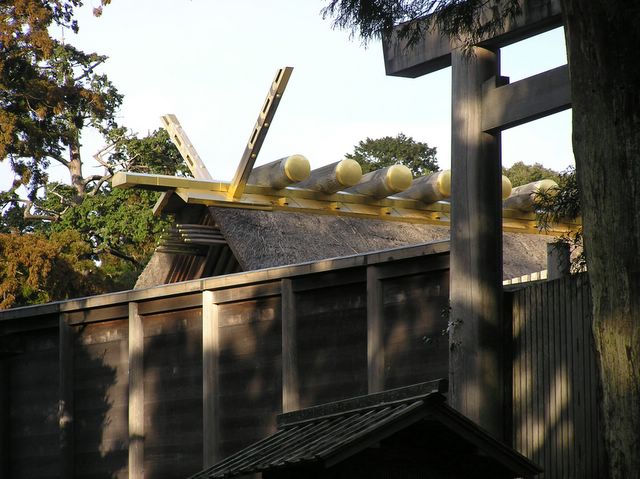
The Inner shrine is actually a complex of 4 or 5 buildings. The first shrine is veiwable by the public, the second shrine is veiwable by those who pay a very large fee, usually large companies, to be blessed. The shrines beyond that are off limits to anyone but the High Priests and the Emporer. The reson for this is that in one of those shrines is the Bronze Mirror one of Japan's Three Sacred Treasures. This is the second shrine from right outside the complex.

Subscribe to:
Comments (Atom)